
Recovery Is Not the Absence of Training — It Is the Completion of It
There is a persistent misconception in fitness culture that the most dedicated athletes are the ones who train the most, the hardest, and with the fewest days off. The reality supported by decades of exercise science is considerably more nuanced. Training creates the conditions for adaptation, but the adaptation itself — the actual physiological changes that produce stronger muscles, a more efficient cardiovascular system, and improved endurance — occurs during the recovery period that follows. Without adequate and well-monitored recovery, training stimulus accumulates as damage rather than converting into growth. Understanding this distinction is the starting point for any serious conversation about optimizing physical performance or long-term health.
Heart rate variability has emerged as one of the most practical and accessible tools for monitoring recovery quality on a daily basis. Unlike subjective measures of fatigue or readiness, which are notoriously unreliable — particularly in motivated athletes who tend to underreport how depleted they actually feel — HRV provides an objective physiological signal that reflects the current state of the autonomic nervous system. Because the autonomic nervous system oversees virtually every major bodily process involved in recovery, including cardiovascular regulation, immune function, hormonal balance, and sleep architecture, HRV serves as a remarkably integrative summary of how well the body is managing the demands placed on it.
Understanding the Autonomic Nervous System and Its Role in Recovery
The autonomic nervous system operates largely outside conscious awareness, regulating the body's internal environment in response to constantly shifting demands. Its two principal branches — the sympathetic and parasympathetic systems — work in dynamic balance, with each playing distinct roles depending on whether the body is in a state of exertion or rest. The sympathetic branch governs the stress response: it accelerates the heart, redirects blood flow to muscles, suppresses digestion, and sharpens alertness. The parasympathetic branch, by contrast, promotes the conditions needed for restoration: it slows the heart, supports digestion and immune function, and facilitates the deep, restorative sleep stages during which tissue repair and hormonal replenishment occur.
When recovery is proceeding well, parasympathetic tone is dominant during rest periods, and the resulting beat-to-beat variation in heart timing — the HRV signal — is relatively high. When the body is under unresolved stress, whether from excessive training load, poor sleep, emotional strain, illness, or any combination of these factors, sympathetic activity remains elevated even during rest periods. This suppresses the parasympathetic signal and narrows the variability between heartbeats, producing a lower HRV reading. The pattern is reliable enough across individuals and conditions that daily HRV monitoring has become a standard practice in elite athletic settings and is increasingly used by recreational athletes and health-conscious individuals as well.
How Sleep Quality Shapes the HRV Signal
Among all the variables that influence HRV on a day-to-day basis, sleep quality has the most consistent and powerful effect. This relationship operates in both directions. High-quality sleep — characterized by adequate total duration, good continuity, and healthy proportions of both slow-wave deep sleep and REM sleep — allows the parasympathetic nervous system to assume the sustained dominance it needs to produce a high HRV reading the following morning. Poor sleep, whether due to insufficient duration, fragmentation, or architectural disruption, prevents this shift from occurring fully and results in suppressed HRV that persists into the day.
The deep sleep stage is particularly critical. During slow-wave sleep, the body releases the majority of its daily growth hormone output, initiates the most intensive phase of cellular repair, and consolidates many of the physiological adaptations stimulated by exercise. Athletes who consistently sacrifice sleep duration to accommodate early morning training may be inadvertently undermining the very adaptations their training is designed to produce. Monitoring HRV provides a concrete daily indicator of whether sleep is actually delivering the recovery it is supposed to, which is information that the subjective sense of feeling rested often fails to capture accurately.
Sleep environment, timing, and pre-sleep habits all contribute to sleep quality in ways that are measurable through their downstream effects on HRV. Consistent sleep and wake timing that aligns with natural light cycles supports robust circadian rhythms and promotes deeper, more consolidated sleep architecture. Elevated core body temperature, whether from exercise within a few hours of bedtime or from a warm sleeping environment, disrupts the cooling process the body uses to initiate and maintain deep sleep. Alcohol, even in moderate amounts, suppresses REM and deep sleep stages and increases sympathetic nervous system activity overnight — effects that show up clearly in next-morning HRV readings for most people who track consistently.
Exercise Load, Adaptation, and the Recovery Window
The relationship between training and HRV follows a predictable pattern that, once understood, becomes a powerful guide for structuring training intelligently. A demanding workout — whether a high-intensity interval session, a long endurance effort, or a heavy strength training day — will typically suppress HRV the following morning. This suppression reflects the body's allocation of resources toward repair and adaptation rather than readiness for further exertion. It is not a sign of poor fitness or a reason for alarm. It is the expected physiological response to an appropriate training stimulus.
The critical question is what happens next. In a well-recovered athlete following a manageable training load, HRV typically rebounds to baseline or above within 24 to 48 hours. When this rebound occurs consistently over weeks and months of training, the cumulative effect is a progressive upward shift in the resting HRV baseline — one of the clearest physiological signatures of improving cardiovascular fitness and autonomic adaptability. When HRV fails to rebound, or when it drifts progressively lower across multiple training days without recovering, the pattern signals that the training load is outpacing the body's recovery capacity. Continued training through this warning signal is one of the primary mechanisms through which overtraining syndrome develops.
For athletes looking to apply this framework practically, detailed guidance on structuring training and recovery to produce lasting improvements in HRV is available through resources like the cudis hrv recovery guide, which outlines evidence-based strategies for improving HRV through targeted lifestyle interventions covering sleep, exercise periodization, stress management, and nutrition timing.
The Role of Stress and Emotional State in HRV Regulation
Physical training is not the only form of stress that suppresses HRV. The autonomic nervous system does not distinguish cleanly between different sources of demand. Psychological stress, emotional conflict, work pressure, relationship strain, and even social isolation all activate sympathetic pathways and reduce parasympathetic tone in ways that register in the HRV signal. This is one of the reasons that elite athletes who are physically well-trained can still show suppressed HRV during periods of high psychological stress, and why recovery planning that addresses only physical load while ignoring psychological load tends to be incomplete.
Mindfulness practices, controlled breathing, and other parasympathetic activation techniques have demonstrated measurable effects on HRV through their direct influence on vagal tone. Slow diaphragmatic breathing at a rate of approximately five breath cycles per minute has been shown to synchronize with the heart's natural rhythmic variability, producing both acute increases in HRV during the practice and cumulative baseline improvements with regular use. These interventions do not require large time investments to produce measurable effects, which makes them practically accessible additions to any recovery protocol.
Key Drivers of HRV Change: A Comparative Overview
| Lifestyle Variable | Direction of HRV Effect | Speed of Response | Notes |
|---|---|---|---|
| Consistent high-quality sleep | Positive | Immediate + cumulative | Single most impactful variable |
| Progressive aerobic training | Positive (long-term) | Weeks to months | Short-term suppression is normal post-session |
| Diaphragmatic breathing practice | Positive | Minutes + cumulative | 5-6 breaths/min most effective |
| Alcohol consumption | Negative | Same night | Even moderate amounts affect overnight HRV |
| Psychological/emotional stress | Negative | Days to weeks | Often underestimated in training contexts |
| Inadequate caloric intake | Negative | Days | Energy deficit impairs autonomic regulation |
| Cold exposure (brief) | Positive (acute) | Minutes to hours | Cold showers, cold water immersion |
Nutrition, Hydration, and Their Underappreciated Effects on HRV
The nutritional dimension of HRV regulation is often underappreciated relative to sleep and exercise. Adequate caloric intake is a prerequisite for effective autonomic regulation. Athletes who train in a significant caloric deficit — whether intentionally for body composition goals or inadvertently through poor meal timing — often show suppressed HRV that does not respond normally to recovery practices. The body interprets energy scarcity as a stressor and maintains sympathetic activation accordingly, regardless of how well other recovery inputs are managed.
Protein timing and carbohydrate availability are specifically relevant to post-exercise recovery. Consuming adequate protein within the recovery window after training supports muscle protein synthesis and provides the substrate for the repair processes that convert exercise stress into adaptation. Carbohydrate intake replenishes the glycogen stores depleted during training and supports the stable blood glucose levels that allow the brain and nervous system to shift into a recovery-oriented state. Chronic low carbohydrate availability, particularly in endurance athletes with high training volumes, has been associated with suppressed HRV and disrupted sleep architecture in ways that mirror overtraining.
Hydration affects HRV through its influence on blood viscosity and cardiovascular efficiency. Even mild dehydration increases the heart's workload and can elevate resting heart rate while suppressing HRV. Athletes who train in hot environments, or who sweat heavily during training without replacing fluids adequately, may notice that their morning HRV readings are lower on days following sessions where hydration was insufficient — an effect that typically resolves quickly with rehydration.
Watch: How to Use HRV Data to Guide Your Training and Recovery
https://www.youtube.com/watch?v=VkXjGs99-A4
[embed]https://www.youtube.com/watch?v=VkXjGs99-A4[/embed]
Building a Personal HRV Baseline and Reading It Accurately
The practical value of HRV data depends entirely on having a meaningful baseline to compare against. Because individual HRV values vary enormously across people — driven by age, genetics, fitness level, body size, and measurement methodology — population averages provide limited guidance for personal interpretation. What matters is how your reading on any given day compares to your own established range under normal, reasonably healthy conditions.
Establishing this baseline requires several weeks of consistent measurement collected during a period of typical, sustainable training without unusually high life stress or illness. During this period, the emphasis should be on accumulating data rather than interpreting it. Once a stable range is established, deviations become interpretable. A reading significantly above baseline may indicate an unusually well-recovered state and an opportunity to take on a more demanding session. A reading significantly below baseline, particularly when combined with elevated resting heart rate, often warrants a lighter training day or additional rest — even if subjective energy levels feel adequate.
The combination of multiple signals — HRV, resting heart rate, sleep quality scores, and subjective readiness — provides more reliable guidance than any single metric in isolation. When these signals align, confidence in the interpretation is higher. When they conflict, additional caution is warranted. Over time, consistent monitoring builds a nuanced, personalized understanding of how the body responds to training, stress, and recovery inputs that no generic training plan can provide.
Closing Perspective
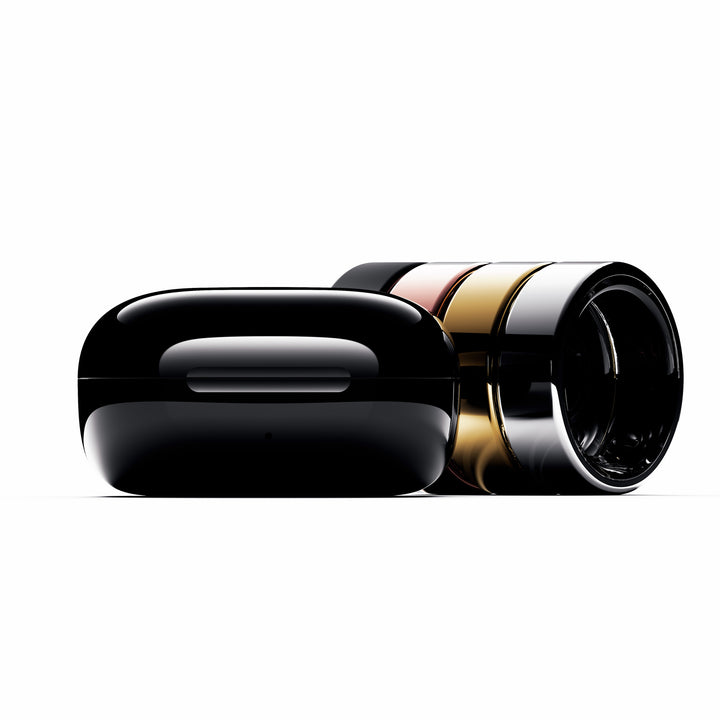
Recovery is not a passive state between workouts. It is an active, biologically complex process that determines how much of the effort invested in training actually converts into lasting improvement. HRV gives athletes and health-conscious individuals a daily window into this process — an objective signal that reflects the integrated output of systems governing sleep quality, stress regulation, cardiovascular adaptation, and hormonal balance. Learning to read that signal thoughtfully, in context and over time, is one of the more powerful skills available to anyone serious about physical performance or long-term wellbeing. For continuous, passive HRV monitoring built into a comfortable everyday wearable, Cudis offers a smart ring designed to track HRV, sleep, recovery, and stress around the clock without disrupting the routines it is meant to support.